
LOLER and PUWER Explained: What Every Forklift Operator Needs to Know
Most site managers know their forklift needs a Thorough Examination. Far fewer know that a single inspection must satisfy two entirely separate sets of health and safety regulations. Get one wrong, and your equipment could be legally signed off while still posing a genuine risk to your operators.
That is not a compliance grey area. It is a gap that has caused accidents, and it is one we see regularly when new clients come to us after years of incomplete inspections.
In this guide, we explain what PUWER and LOLER each require, what sets them apart, and why any Thorough Examination that does not cover both leaves your business exposed.
Free Site Survey
Rapid Breakdown Callout
Free Fleet Assesment
Toyota Class Service at Low Cost
What Does PUWER Mean?
PUWER stands for the Provision and Use of Work Equipment Regulations 1998, a set of HSE regulations that require employers to keep all work equipment safe, to have it regularly inspected, and to operate it only by adequately trained personnel.
The scope of PUWER is broader than many people expect. It applies to everything from a handheld power tool to a forklift truck, and it covers any activity involving that equipment, including starting, stopping, transporting, maintaining, and cleaning it. If it is used at work, PUWER applies.
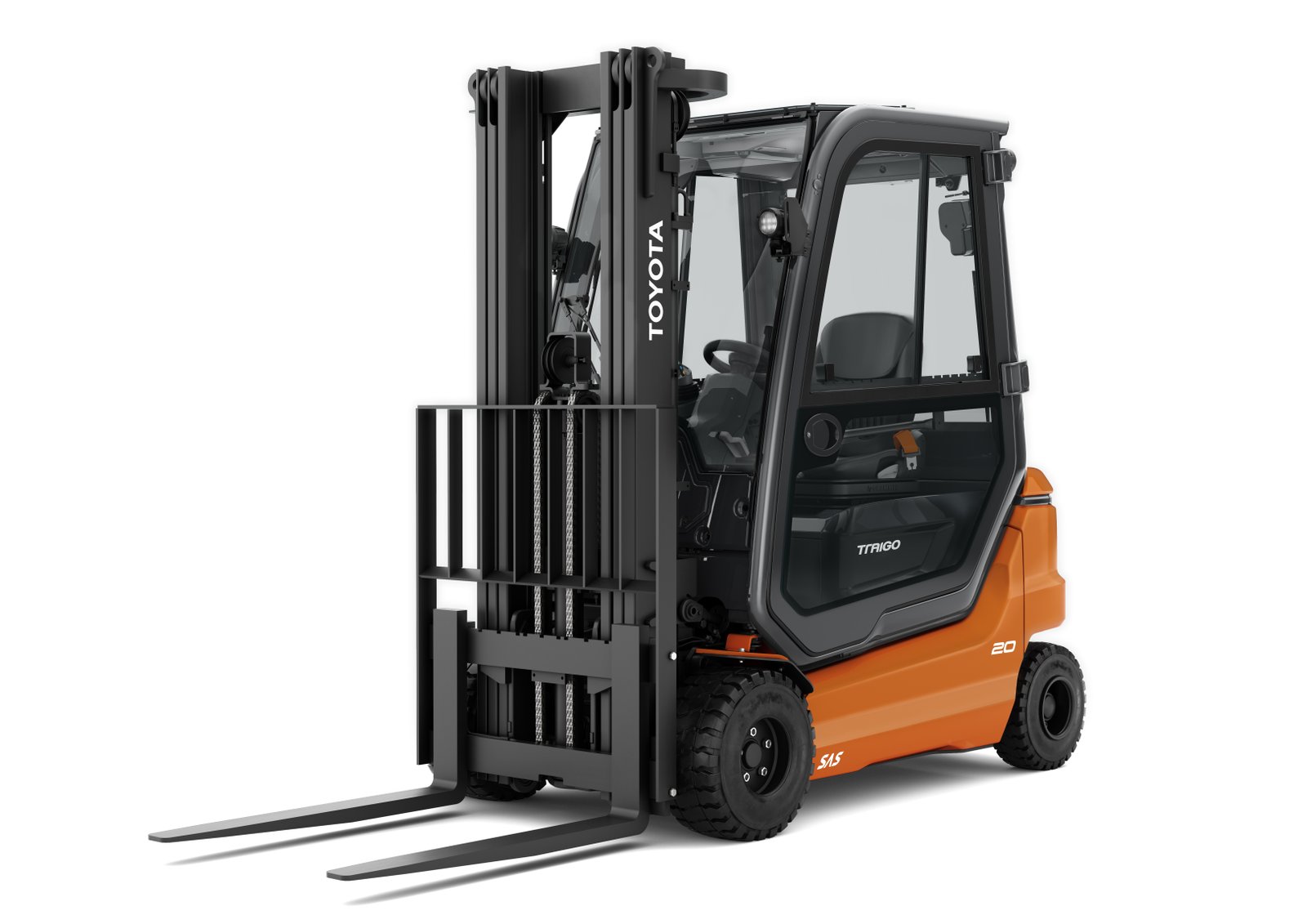
For forklift trucks, PUWER specifically governs the parts of the vehicle that make it a vehicle, not a lifting machine. Think of it this way: a forklift shares many safety-critical systems with any other industrial vehicle on your site. PUWER is the regulation that makes sure those systems are kept in safe working order.
What PUWER Covers?
| PUWER (VEHICLE SAFETY) |
|---|
| Overhead Guard or Cab |
| Steering System |
| Driver Seat, Seat Mountings & Belt |
| Counterweight & Chassis |
| Brakes (Service & Parking) |
| Wheels, Tyres & Bearings |
| Traction & Transmission |
So what does this mean in practice? It means that even if your lifting gear is checked thoroughly, an uninspected brake failure or a worn tyre is still your legal responsibility under PUWER.
What Does LOLER Mean?
LOLER stands for the Lifting Operations and Lifting Equipment Regulations 1998, and it is the legislation that sets out the formal legal requirement for Thorough Examinations of lifting equipment.
LOLER applies to any equipment used for lifting loads, and for forklifts, it covers every component involved in the lifting function. This is the part of the inspection most people are familiar with, and the reason many refer to the whole exercise as a “LOLER test” or “LOLER check.”
What LOLER Covers?
| LOLER (LIFTING EQUIPMENT) |
|---|
| Mast & Telescopic Boom (Telehandlers) |
| Lifting Chains, Anchor Points & Pulleys |
| Load Backrests & Load Backrest Extension |
| Tilt Mechanism & Hydraulic Cylinders |
| Hydraulic Systems, Hoses & Reservoirs |
| Carriage & Fork Arms |
| Attachments & Side Shifts |
| Controls, Cables & Linkages |
| Capacity Rating Plate |
One important detail worth knowing: LOLER applies to equipment that lifts over 300mm. A standard pedestrian pallet truck typically lifts below that threshold, which means it falls outside LOLER entirely. However, it is still subject to PUWER. This is a distinction that catches many operators off guard.
What Is the Difference Between LOLER and PUWER?
The difference between LOLER and PUWER is that LOLER governs the lifting components of a forklift, while PUWER governs the vehicle components, and both sets of regulations apply simultaneously to every forklift truck in your fleet.
Here is the key point: these are not alternative regulations. They are complementary ones. A forklift is both a lifting machine and a driven vehicle, which means it falls under both sets of rules at the same time.
LOLER focuses on what the forklift lifts with: the mast, chains, hydraulics, forks, and carriage. PUWER focuses on what the forklift drives with: the brakes, tyres, steering, seat, and transmission. Neither regulation alone is sufficient to confirm that a forklift is safe to operate, because neither covers the full machine.
The confusion arises because the formal legal requirement for Thorough Examinations is written into LOLER. This leads many operators and even some inspection providers to treat LOLER as the only regulation that matters. In reality, a Thorough Examination that does not also satisfy PUWER is incomplete, regardless of how thorough it appears on paper.
Why a Thorough Examination Must Cover Both LOLER and PUWER
A Thorough Examination is the mandatory inspection legally required to confirm that a forklift is safe for use, and it must satisfy both LOLER and PUWER to be considered legally compliant.
The MOT comparison is one we use regularly with our clients, because it is the clearest way to illustrate the point. You would not accept an MOT that only checked your engine and ignored your brakes. The same logic applies here. A Thorough Examination that only covers the lifting gear is not a complete inspection, even if it produces a certificate.
This matters more than many site managers realise. If an incident occurs on your site and your Thorough Examination records show that brakes, tyres, or steering were never inspected, you could be found in breach of PUWER. The existence of a LOLER certificate will not protect you if PUWER obligations have not been met.
Is it worth the risk? We would argue not, particularly when the solution is straightforward: commission a Thorough Examination that covers both sets of regulations in a single visit.
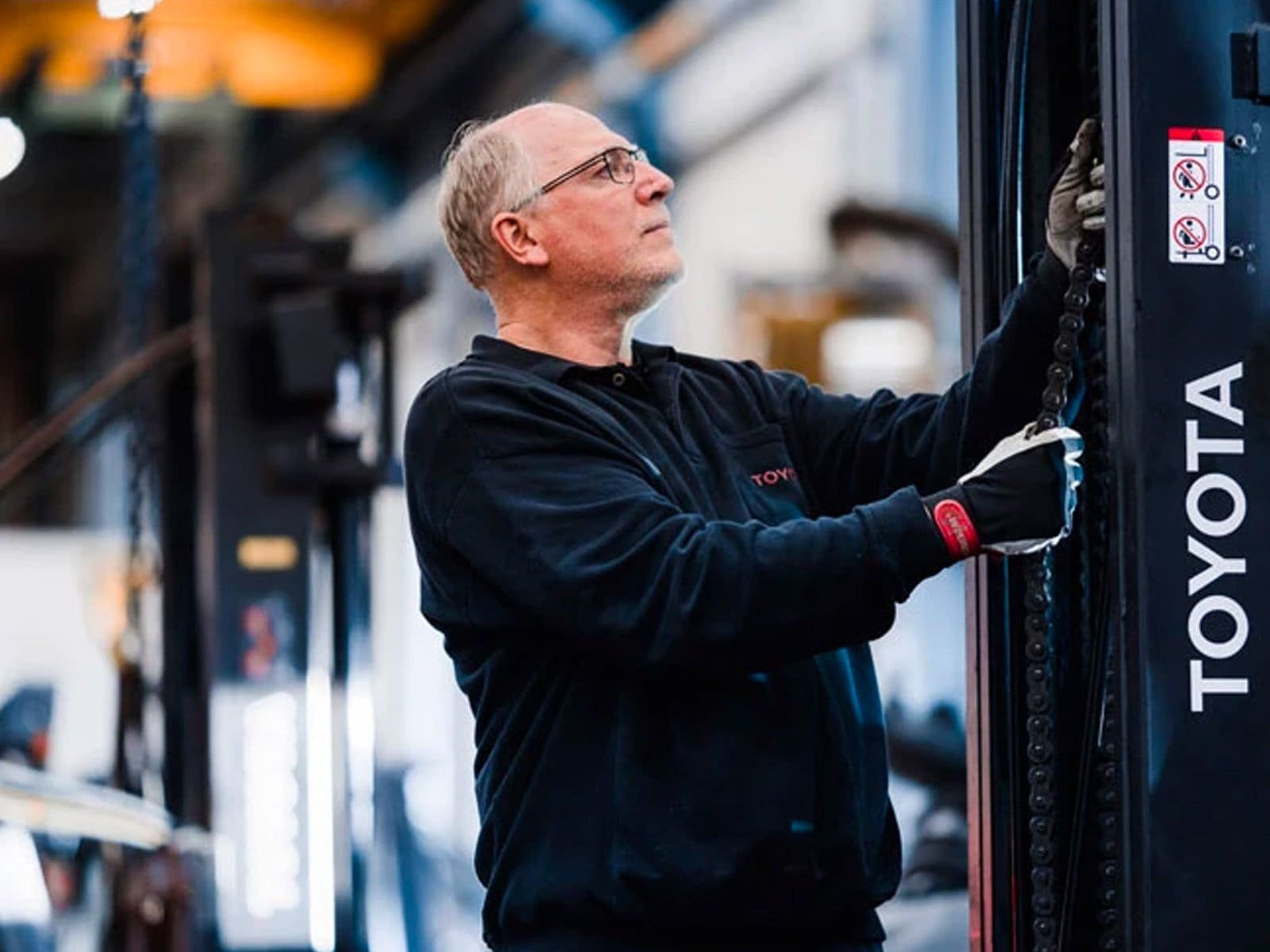
Our Field Service Engineers carry out Thorough Examinations that address LOLER and PUWER together, covering every safety-critical component on the truck and issuing the relevant statutory documentation on completion.
How Often Does Your Forklift Need a Thorough Examination?
All lifting equipment must receive a Thorough Examination at least once every twelve months, though the required frequency can increase depending on the type of equipment, its workload, and the environment in which it operates.
Several factors can shorten the interval between examinations:
Equipment that lifts people, such as order pickers and man-up VNA trucks, must be examined every six months under LOLER. This is a hard legal requirement, not a recommendation.
Operating conditions also play a role. Equipment working in corrosive environments, running high operating hours, or fitted with specialist attachments may require more frequent inspection than standard annual intervals.
Exceptional circumstances trigger an additional examination regardless of when the last one took place. These include after any accident or incident involving the equipment, following a significant repair, or after a prolonged period of disuse.
If you are unsure how frequently your equipment needs examining, the interval will depend on a combination of truck type, attachment configuration, hours in service, and site conditions. Our engineers can advise you on the correct schedule for your specific fleet.
What Equipment Do LOLER and PUWER Cover?
LOLER and PUWER apply to all material handling equipment with a lifting function, which includes the full range of forklift trucks and specialist handling machines used in warehouse and industrial environments.
This includes:
- Counterbalance forklifts (electric, LPG, and diesel)
- Reach trucks and narrow-aisle trucks
- VNA trucks (man-down and man-up)
- Telehandlers and rough terrain vehicles
- Order pickers and man-up machines
- Articulated forklifts
- Tow tractors where lifting is involved
As noted earlier, pedestrian pallet trucks that lift below 300mm sit outside the scope of LOLER, but they remain subject to PUWER. Their brakes, wheels, and safety systems still require regular inspection and must be maintained in safe working order.
The answer, in every case, is to work with a service provider who understands both regulations and applies them together as a matter of course, not as an afterthought.
Keeping Your Fleet Compliant
Understanding the difference between LOLER and PUWER is the first step. Acting on that knowledge is what keeps your operators safe and your business legally protected.
PUWER and LOLER are not box-ticking exercises. They are the framework that confirms your equipment is fit for purpose, your operators are working safely, and your business can demonstrate compliance if it is ever called upon to do so.
At Easy Truck, our Thorough Examinations cover both LOLER and PUWER as standard, carried out by qualified Field Service Engineers with the documentation to match. We also offer operator training accredited by AITT, because PUWER requires that equipment is used only by adequately trained personnel, and that obligation sits with you as the employer.
