
What is a Cherry Picker?
Need to reach a window on the fourth floor, install a lighting rig at an event, or capture an aerial shot for film? A cherry picker could be the solution. These versatile machines have grown far beyond their orchard roots and are now a cornerstone of safe, efficient work at height across countless industries. This article explains what they are, where they came from, the different types available, and how Easy Truck can help you choose the right one.
Free Site Survey
Rapid Breakdown Callout
Free Fleet Assesment
Toyota Class Service at Low Cost
In This Guide We Will Cover:
- What Is a Cherry Picker (Boom Lift)?
- Where Did the Name Come From?
- Understanding Mobile Elevating Work Platforms (MEWPs)
- Why Choose a Cherry Picker?
- What Are the Different Types of Cherry Pickers?
- What Are The Common Applications Of Cherry Pickers?
- Should You Hire or Buy a Cherry Picker?
- Who Can Operate a Cherry Picker?
- How To Stay Safe On a Cherry Picker?
- Are Cherry Pickers the Same as Scissor Lifts or Telehandlers?
What Is a Cherry Picker (Boom Lift)?
A cherry picker – also known as a boom lift – is a type of Mobile Elevating Work Platform (MEWP). It’s a hydraulic-powered machine designed to lift people to high or hard-to-reach areas safely. At its core, a cherry picker features a platform or bucket attached to a lifting arm that extends either vertically, horizontally, or both. Some are mounted on vehicles for added mobility, while others operate independently.
This piece of equipment has become essential for work where access to elevated spaces is required. You’ll see them in action across sectors like construction, maintenance, logistics, events, and film production.
Where Did the Name Come From?
The name ‘cherry picker’ harks back to its agricultural roots. It was originally designed to help farm workers safely pick fruit from tall trees. The term stuck, and today it covers a wide range of machines that do far more than harvest cherries.
Other Names You Might Hear
Cherry pickers often go by several other names depending on the industry. They are frequently called boom lifts, a term that highlights the extending arm mechanism. In safety regulations and technical manuals, they are referred to as MEWPs (Mobile Elevating Work Platforms). In some cases, people use the terms aerial work platform, elevated platform or Powered Access Platform. Though these names differ, they all point back to the same core concept: a machine designed to lift people and tools safely to elevated positions.
Understanding Mobile Elevating Work Platforms (MEWPs)
Cherry pickers belong to a broader category called Mobile Elevating Work Platforms. MEWPs are machines that allow workers to safely access elevated areas. Alongside cherry pickers, other MEWP types include scissor lifts, personnel lifts, and push-around platforms. Each serves a distinct purpose, but cherry pickers are especially known for their reach and flexibility.
Why Choose a Cherry Picker?
One of the biggest reasons professionals opt for cherry pickers is safety. Unlike ladders or scaffolding, these platforms offer stable, enclosed spaces for workers and equipment. That means fewer risks and more efficiency.
They also improve access. Articulating booms can work around obstacles like shelving or steel frames, while telescopic booms provide greater horizontal reach. And let’s not forget the added bonus – you can bring your tools up with you, cutting down on repeated trips.
What Are the Different Types of Cherry Pickers?
There are several types of cherry pickers, each with its own strengths.
Articulating boom lifts have joints that allow them to reach up and over obstacles. They’re ideal for tricky spaces where manoeuvrability is key. Telescopic booms, by contrast, extend in a straight line. They don’t bend around objects, but they offer impressive reach and stability.
Spider lifts are compact and lightweight, often used indoors or on difficult terrain. Thanks to their outriggers, they can stabilise themselves even on uneven ground. Mast booms work best in tight indoor spaces, moving vertically to reach elevated shelves or ceilings.
What Are The Common Applications Of Cherry Pickers?
Cherry pickers, also known as Mobile Elevated Work Platforms (MEWPs), are incredibly versatile machines. Ideal for both internal and external applications, they provide outstanding reach and the ability to work safely at greater heights. Although widely recognised for their role in construction and maintenance, they are valuable across many different industries. Here are some of the most common uses:
Agriculture and Horticulture
Still true to their origins, cherry pickers help with fruit harvesting, maintaining farm equipment, and managing tall crops.
Building Maintenance
Perfect for exterior tasks like window cleaning, painting, and repairs. They allow operators to reach difficult spots with tools and equipment safely in the basket.
Construction Projects
A safer and more efficient alternative to ladders and scaffolding. They are frequently used for roofing, steel erection, and installations at height.
Warehouse Operations
Ideal for stock picking, maintenance, or cleaning in large warehouses. Compact models are even suitable for narrow-aisle work where space is limited.
Electrical Work
Essential for utility teams working on power lines, telephone poles, or lighting towers. Cherry pickers enable precise, stable positioning and safer access to overhead infrastructure.
Signage Installation
From shopfronts to highway billboards, cherry pickers give installers a secure platform to work efficiently with their tools and materials.
Tree Care and Landscaping
Arborists use them for pruning, trimming, or removing trees. They offer a safer option than climbing and make tall or awkward trees accessible.
Film and Photography
Indispensable for capturing aerial shots or providing elevated lighting positions at events, film sets, or sports matches.
Stadium and Large Venue Maintenance
Used for lighting, scoreboard repairs, and upkeep in large arenas or stadiums. They simplify complex tasks by giving technicians a stable, elevated platform.
Emergency Services
In firefighting or rescue operations, cherry pickers provide rapid access to upper floors, rooftops, or balconies, helping teams reach people quickly and safely.
Should You Hire or Buy a Cherry Picker?
The decision often comes down to frequency of use. If you need access platforms regularly, investing in your own machine might save money in the long run. For one-off jobs or seasonal work, hiring makes more sense.
At Easy Truck, we make the choice easier by offering three main routes:
Rapid availability means equipment is typically delivered within 1–2 days, so you get the machine when you need it. Hire periods are flexible and can be adjusted as your project evolves. You only pay for the duration required, with no long-term commitment.
Ideal for businesses wanting predictable costs. Fixed monthly payments cover the machine, maintenance, call-outs, and LOLER certifications. At the end of the contract, you have the option to upgrade or replace your forklift or access platform to keep pace with operational demands.
This option spreads the cost of ownership. With affordable instalments, you gain full ownership at the end of the term, while managing budgets effectively along the way.
The Case for Buying
For businesses with ongoing work-at-height or material handling needs, ownership can be the most cost-effective choice. Buying removes the uncertainty of availability and gives you control over how and when your machines are used. It also builds equity in your fleet, which is an asset for your company. With Easy Truck, purchased machines are backed by servicing, parts, and long-term support, ensuring that ownership remains reliable and cost-efficient over the lifespan of the equipment.
Easy Truck offers flexible solutions for all three options, backed by expert support and servicing.


Who Can Operate a Cherry Picker?
In the UK, operating a cherry picker requires formal training. Most operators need an IPAF PAL Card, which confirms they’ve completed accredited courses. Easy Truck ensures operators are not only introduced to IPAF training but also supported through an AITT-accredited training provider. This means our training programmes meet strict national standards and give operators the confidence, knowledge, and hands-on experience needed to work at height safely and efficiently.
Our courses cover everything from safe control of MEWPs and harness awareness to site assessment and risk management. Training can be carried out either on your site or at our dedicated training centre, ensuring flexibility for businesses of all sizes.
How To Stay Safe On a Cherry Picker?
Operating a cherry picker requires a strong commitment to safety, precision, and skill. To ensure smooth and safe operation of your MEWP, operators should follow a structured checklist and apply consistent safety practices.
Training and Safety Protocols
Before using a cherry picker, every operator should be properly trained. IPAF courses and other accredited programmes give operators the knowledge to understand controls, follow regulations, and practise safe habits when working at height. At Easy Truck, we provide IPAF-accredited training for beginners and experienced operators alike.
Pre-Operation Checks
Before starting work, the environment must be safe. This includes assessing ground stability, clearing away hazards, and carrying out inspections. Visual checks should look for leaks, damage, or loose components. Functional checks should confirm that platform controls, hydraulics, and emergency systems are operating correctly. Daily checks are vital, even after Easy Truck has completed a full pre-delivery inspection.
Ground Stability and Site Conditions
A cherry picker must always be positioned on stable ground. Heavy MEWPs can cause settling, which risks tipping if the base is uneven. Operators should confirm the surface is secure and free from hazards such as power lines, debris, or unstable surfaces. Weather conditions should also be considered before raising the boom.
Safety Rules While Operating
Operators should always wear PFPE (Personal Fall Protective Equipment), including a properly fitted harness attached to an anchorage point. It is also essential to respect the manufacturer’s Safe Working Load (SWL). Overloading the platform puts both the operator and the equipment at risk. Controlled speed is equally important, avoid jerky movements and keep travel steady, particularly in busy or confined areas.
Awareness and Communication
Situational awareness saves lives. Operators must maintain constant communication with ground staff, using radios or hand signals. The platform should never be left unattended while elevated, and exiting the basket at height must only occur in exceptional circumstances with full safety measures in place.
Emergency Preparedness
Every site should have a rescue plan. Ground controls must remain accessible, and operators should be trained in manual lowering procedures in case of power failure. Teams should also agree on communication protocols and evacuation routes, so everyone knows what to do in an emergency.
End-of-Day Checks
Once work is finished, operators should clean and inspect the machine, removing debris and checking for wear or damage. The cherry picker should be parked securely on stable ground, switched off, and locked. Emergency exits and first aid equipment must remain unblocked at all times.
Film and Photography
Indispensable for capturing aerial shots or providing elevated lighting positions at events, film sets, or sports matches.
Stadium and Large Venue Maintenance
Used for lighting, scoreboard repairs, and upkeep in large arenas or stadiums. They simplify complex tasks by giving technicians a stable, elevated platform.
Easy Truck ensures every unit is thoroughly inspected before delivery, giving you a safe starting point. Combined with daily operator checks and proper training, these steps help guarantee a safe and efficient experience on site.
Emergency Services
In firefighting or rescue operations, cherry pickers provide rapid access to upper floors, rooftops, or balconies, helping teams reach people quickly and safely.
Are Cherry Pickers the Same as Scissor Lifts or Telehandlers?
Not exactly. While all are MEWPs, there are key differences that matter when choosing the right equipment for your job:
- Boom lifts (cherry pickers) have a flexible arm, allowing movement both vertically and horizontally. They are the go-to option for tasks where access around obstacles is needed, such as reaching over shelving or signage. Their versatility makes them popular in industries ranging from construction to film production.
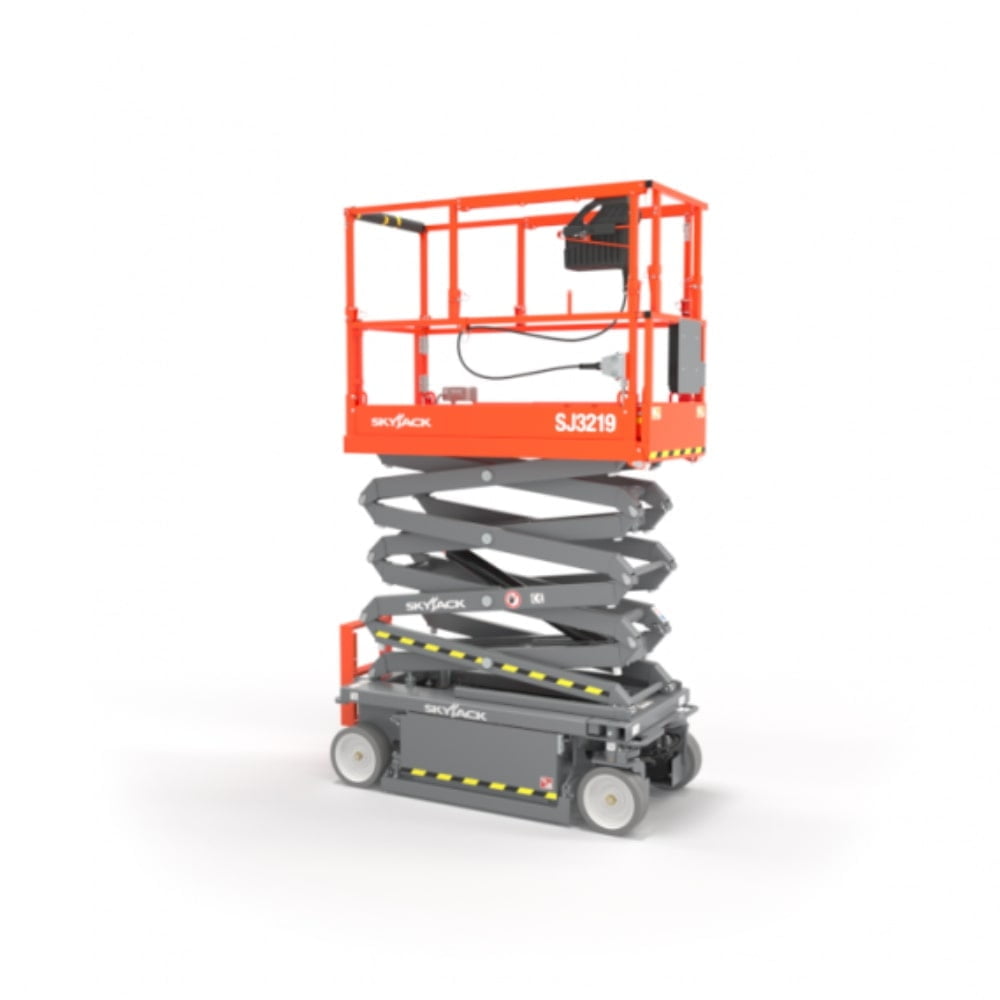
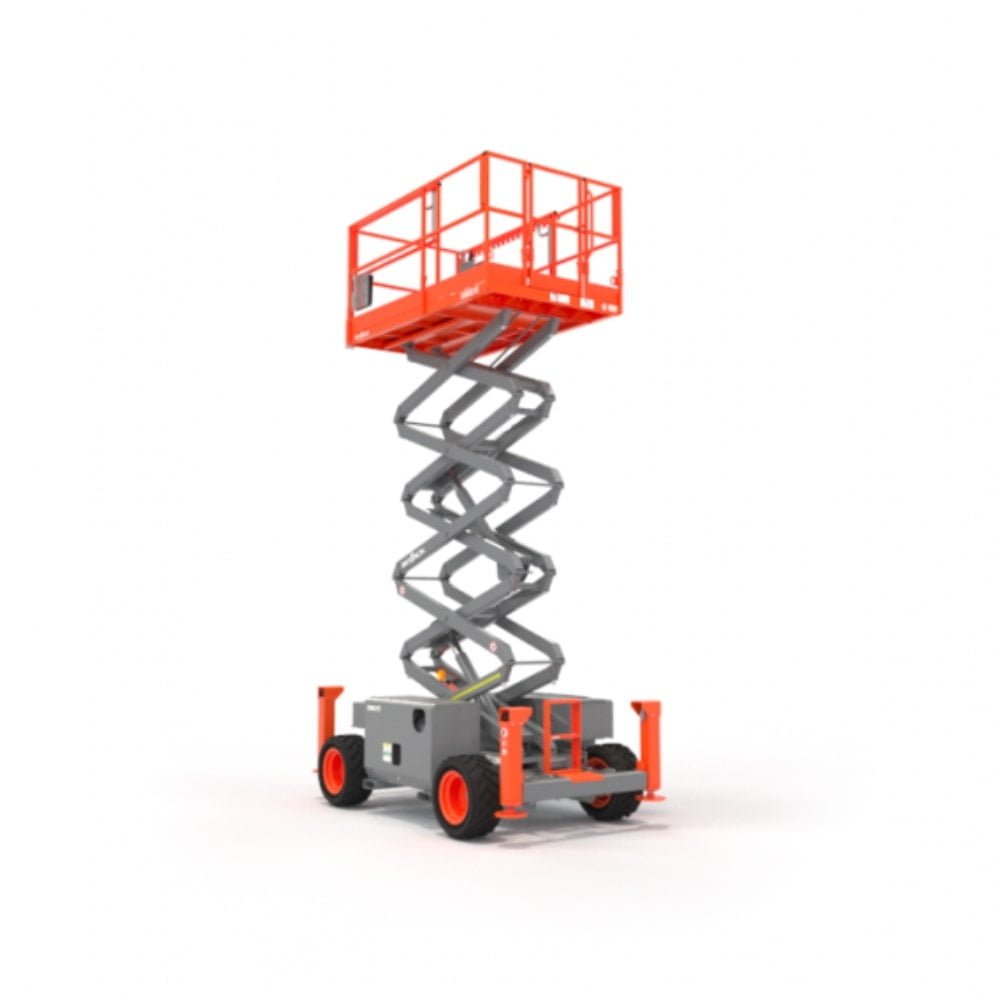
- Scissor lifts move only straight up, making them ideal for vertical tasks like ceiling repairs or stock picking. They provide a large working platform but lack the ability to extend outward, which limits their use in situations where sideways reach is required.
- Telehandlers are primarily designed for lifting and moving heavy materials. They feature a telescopic boom that extends forward, and while some models can be fitted with work platforms to lift personnel, this is secondary to their main purpose. They are widely used in agriculture and construction, where load handling is critical.
Understanding these distinctions is important. Choosing a cherry picker when you really need a scissor lift could lead to inefficiency, while using a telehandler in place of a boom lift may compromise safety. Each machine has a sweet spot, and Easy Truck can help guide you towards the right solution for your task.
Need Help Deciding?
If you’re unsure which type of cherry picker suits your job, we’re here to help. Whether you’re setting up stage lighting or accessing 12-metre-high racking, Easy Truck can guide you to the right machine.
Why Choose Easy Truck?
We’re more than a supplier. At Easy Truck, we focus on solving problems and making your workday easier. That means offering reliable equipment, flexible terms, and expert advice that’s easy to understand and act on.
We supply cherry pickers from respected manufacturers like Toyota and offer everything from short-term hire to full fleet purchases. Our IPAF training, responsive support team, and Midlands-based service make us the go-to choice for access solutions.